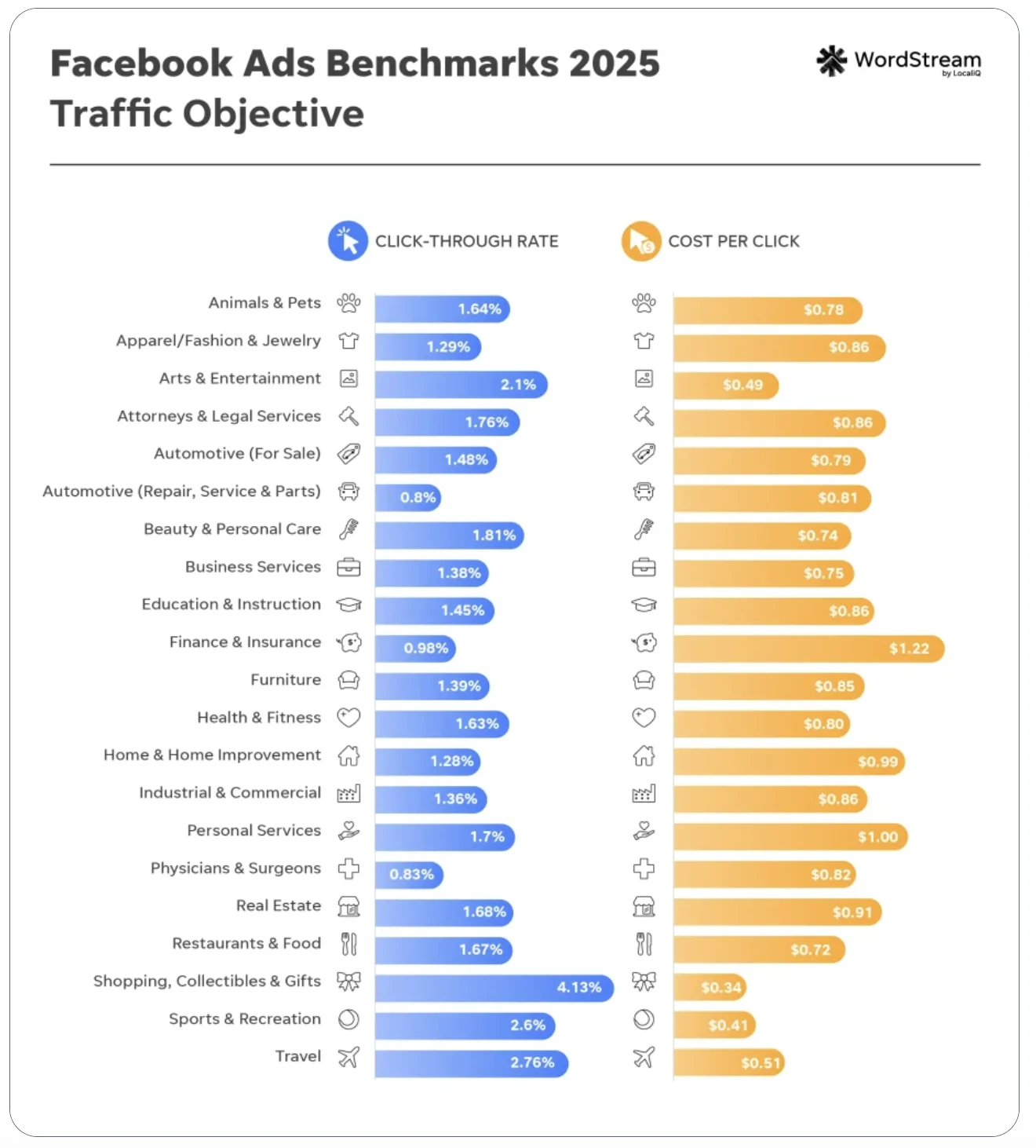
Meta is the more powerful instrument for reaching a consumer audience at scale and at low cost. Facebook advertising converts at roughly 8% to 10% of those it reaches across industries, at an average cost per click below a pound, and returns in the region of £2.80 for every pound spent in a typical consumer campaign. For a local business selling to the public, a dealership or a domestic trade, those economics are difficult to match anywhere else.
What explains the economics is the nature of the platform itself. Beneath Meta sits the most complete consumer dataset in commercial existence, tying people’s interests and purchasing behaviour to billions of daily users. A business no longer selects an audience by hand, rather it supplies the platform with its best existing customers and instructs the algorithm to find more people who resemble them.
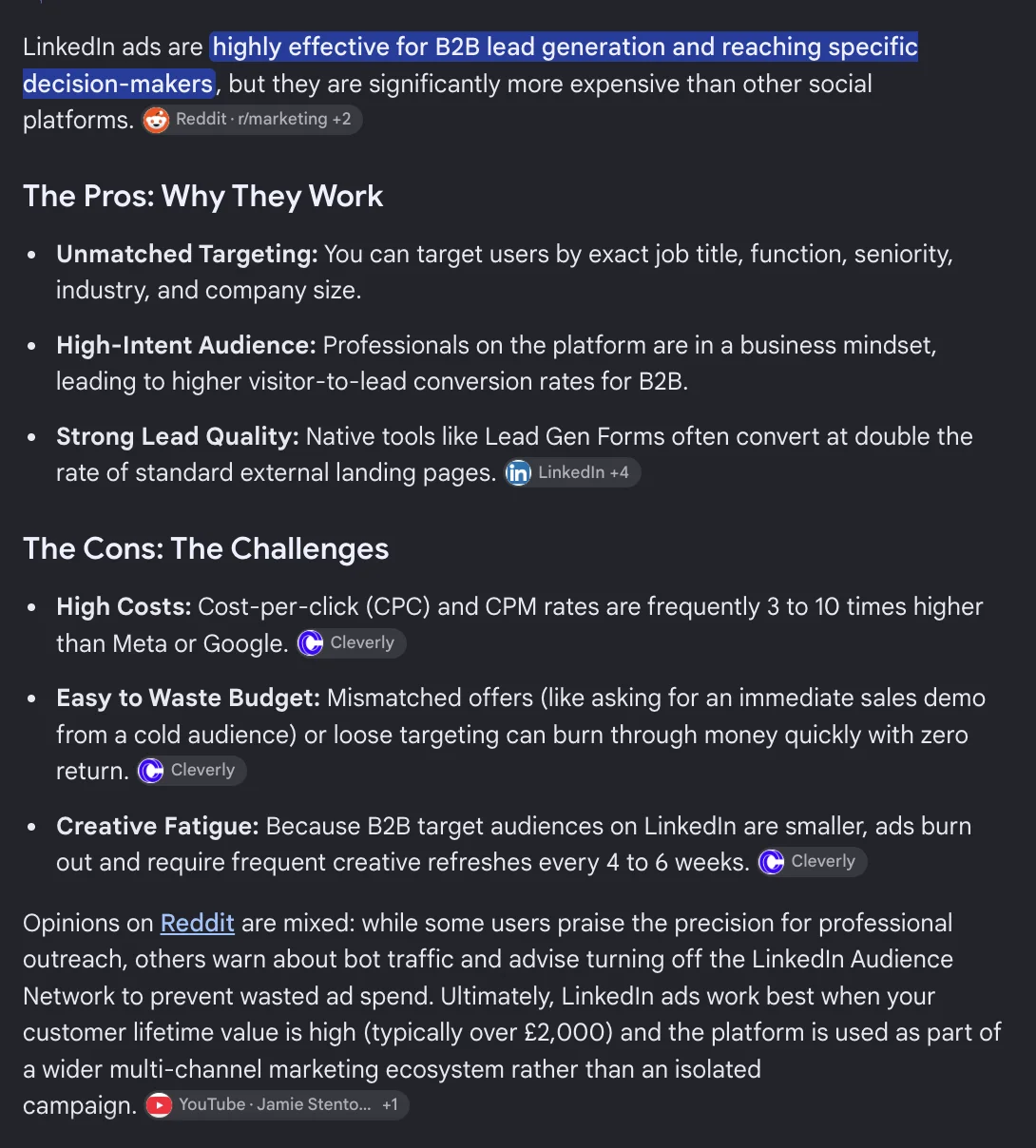
Where Meta knows what people buy, LinkedIn knows what they do for a living, which is the one attribute that matters when the customer is another business. A campaign can be aimed at a specific job title, seniority, industry or company size, so that a proposition can be tailored to reach the ‘decision makers’ of other companies who can aid in the landing of corporate contracts. No other platform offers that resolution.
Evidence supports the premium it commands. A majority of marketers, some 58%, rate LinkedIn as their strongest channel for return on ad spend, and its native lead forms convert in the region of 8% to 15%, well above the rates typical of business-to-business advertising elsewhere. Existing data credits the platform with a conversion advantage over Google Search of around 63% for this kind of buyer.
Two things explain why the mechanism works. A person browsing LinkedIn is already in a professional frame of mind, so a business proposition reads as relevant rather than as an intrusion, unlike the same message arriving between holiday photographs. And the platform suits the long, considered purchase, letting a business identify the exact companies it wants and stay visible to their decision-makers across a sales cycle that may run for months. Cost per lead runs materially higher than Meta’s, frequently several times so, which is the honest qualification. That expense is justified only where the value of a single customer is large enough to absorb it, which is exactly the case in high-value business-to-business work.
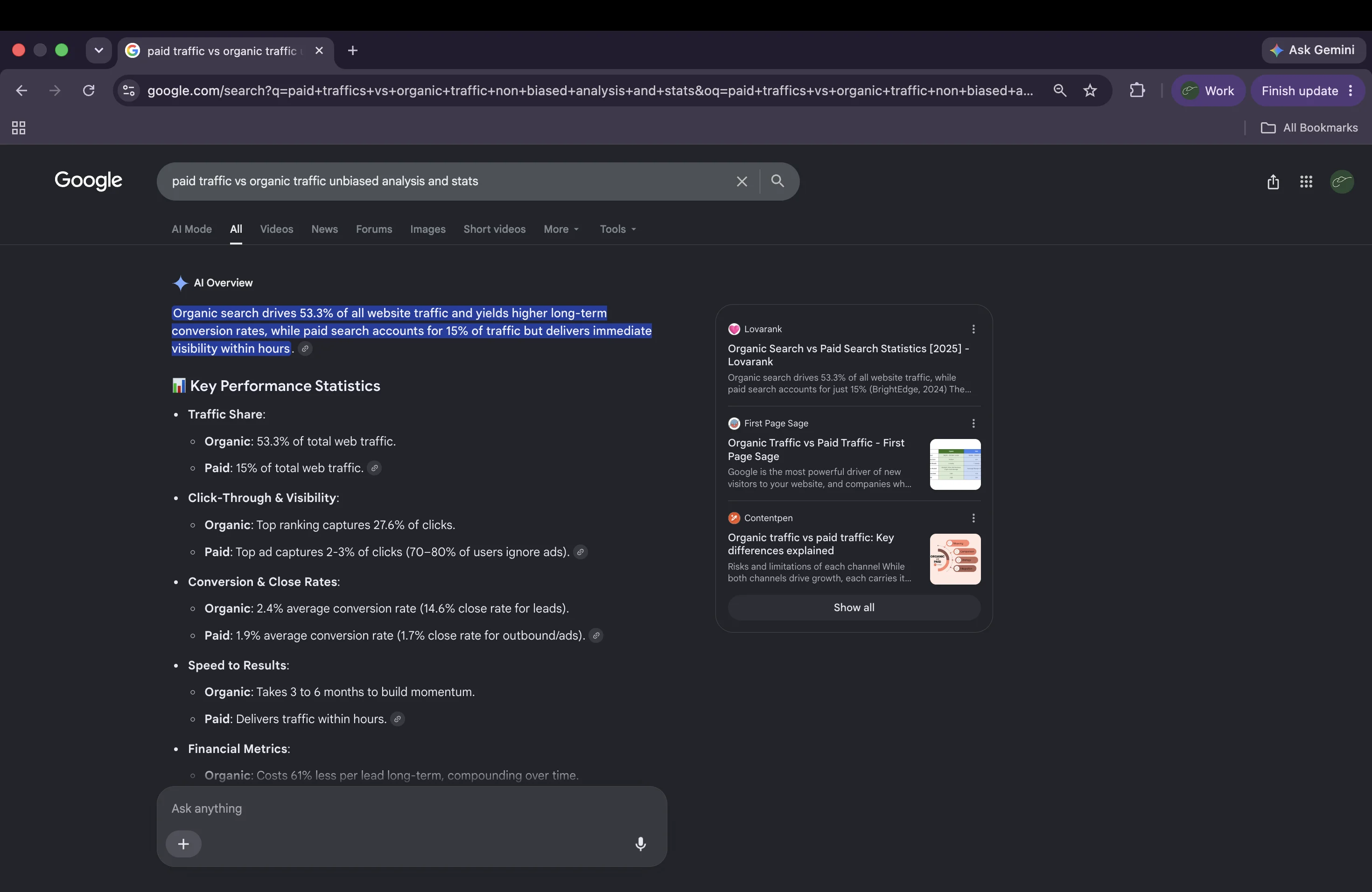
One channel we decline to sell, on principle, is Google’s paid search. Our position is straightforward. As buyers we skip the sponsored results at the top of a search without a second thought. Personally, it gives the vibe of being forced and slightly dodgy, having to pay Google themselves to put you up there. And therefore if we wouldn’t buy it, we won’t sell it. Simple.
That last point is the substance of the objection. Paid search rents a business a position it ceases to hold the instant it stops paying, whereas ranking earned through good SEO, or demand recovered from an existing database, is an asset the business owns outright. And we would rather build the second thing.
None of this is to claim Google Ads never works for anyone, since plenty of businesses run it profitably. We just simply don’t buy into the idea ourselves, and therefore don’t offer it as a service.
We would require you keep at least £500 a month in actual ad spend on top of the fee. This number moves up to a grand in a competitive patch. This allows the campaign to gather enough data to learn. Anyone who takes you on below that without saying so is selling you a retainer, not results.
Ads come last for a reason. Paid traffic is fuel, and fuel poured onto a site that doesn’t convert just sits there, pungent and damp, without catalysing anything. We correct the website and the follow-up first, then ads take it to the next level. An extravagant, yet simple-enough analogy: a muscle-steroid cycle on two genetically-identical individuals, one with a good physique already versus someone considerably out of shape, will give the former superior results in muscle-building.